

Becoming an employer is an exciting time. But, it also comes with a ton of responsibilities, including running payroll, withholding taxes from employee wages, and following oh-so-important workplace laws. But, which workplace and labor laws do your business need to follow?
谁执行工作场所法?
Workplace and labor laws help ensure employees are safe and protected in the workplace. There are a few agencies that enforce employment, labor, and workplace laws, including (but not limited to):
- Department of Labor(DOL): Fosters and promotes the well-being of job-seekers, workers, and retirees.
- Equal Employment Opportunity Commission (EEOC):执行禁止就业歧视的联邦法律。
这两个机构都执行不同的工作场所法律。例如,DOL执行180联邦劳动法。But, not every workplace law applies to your business. So, you need to know which ones your company needs to follow to stay compliant.
7 Workplace and labor laws to keep in mind
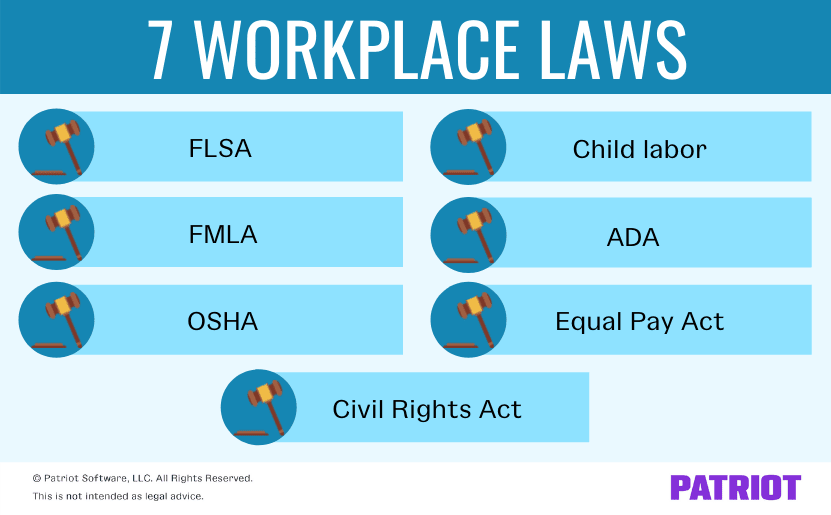
跟上员工保护法需要花费时间(您没有作为忙碌的企业主的时间)。幸运的是,我们汇总了这份工作场所法律清单,以减轻保养的压力。为了避免无意中打破劳动,工作场所或就业法,熟悉这七个工作场所法律。
1.公平劳工标准法
DOL执行《公平劳工标准法》(FLSA). The FLSA protects employee rights by establishingminimum wage,加班和童工法,并确保雇主公平对待员工。例如,在工作周期间,雇主必须在40多个工作时间内加班或一半的雇员向合格的雇员支付。
FLSA规则会影响薪资处理和记录保存。它们还会影响员工可以工作的工作,包括休息和用餐期和待命时间。
To ensure you comply with FLSA requirements, brush up on rules about:
- Overtime
- Minimum wage
- 童工
- Recordkeeping
- Hours worked
- 工资单
2.家庭和病假法
DOL执行的另一项法律是《家庭和病假法》(FMLA). The FMLA requires public, private, or nonprofit employers with more than 50 employees to grant up to 12 weeks of unpaid leave per 12-month period to eligible employees.
Employees are eligible for FMLA leave when they work for an FMLA-covered employer for at least 12 months and have worked 1,250 hours for the employer during the 12 months.
Eligible employees can use FMLA for:
- 这birth, adoption, or foster care placement of a child
- 个人严重的健康状况,阻止员工执行工作
- 照顾患有严重健康状况的配偶,子女或父母
- 由于配偶,子女或父母的军事部署而需要注意的情况
如果您的业务满足要求(即,半径为75英里的员工有50多名员工),则必须向合格的员工提供FMLA。
3. Occupational Safety and Health Act
这Occupational Safety and Health Act(OSHA)调节健康和安全条件
in private sector industries to make sure workplaces do not have any serious hazards. The Department of Labor also enforces the OSHA.
需要遵循OSHA的雇主必须为雇员提供没有严重危害的工作环境。这包括安全性(例如机械),化学(例如酸)和生物学(例如传染性材料)危害。例如,企业在使用危险化学品(例如,穿着防护设备)时必须遵循某些协议。
这OSHA才不是cover the following:
- Self-employed工作人员
- 农场只雇用农民家庭的直系亲属
- 其他联邦机构根据另一项法律规范工人安全的工作条件
- Employees of state and local governments, unless covered under an OSHA-approved state plan
Some public sector employers must also follow the OSHA. To ensure your company doesn’t break any laws, check to see if you’re required to follow the OSHA at your business.
4.童工
Another set of laws the DOL enforces ischild labor laws。童工法律限制和规范有多少hours minors can work and which jobs children can have. While the DOL enforces these sets of laws, the federal government sets them under the FLSA.
童工laws can impact:
- 未成年人可以开始工作
- 未成年人可以执行哪些工作
- How much you must pay minors
- How you pay minors (e.g., hourly, salary, etc.)
- 您向未成年人付款的频率
- 休息和未成年人的饭菜休息
Before you employ any minor, brush up on child labor laws to make sure you’re following the rules based on the minor’s age and type of work.

5.美国残疾人法
EEOC执行《美国残疾人法》。《美国残疾人法》(ADA)禁止雇主在各个方面(包括招聘,培训,福利,薪水等)歧视残疾人reasonable accommodations在办公的地方。
Reasonable accommodations for workers with disabilities may include:
- Frequent breaks
- Accessibility in the workplace (e.g., wheelchair ramps)
- 从家庭选择
- 工作重新分配
As an employer, make sure you followADA在工作场所因此。如果您对《美国残疾人法》有任何疑问,请考虑咨询专家,以确保您保持合规性。
6.同等薪酬法
《平等薪酬法》是EEOC下的另一项法律。根据《同等薪酬法》,雇主必须向所有工人付款,无论性别如何,他们都从事相同类型的工作。如果员工执行同等的工作并承担同等责任,则向员工支付相同的工资。并且,确保其他薪酬和福利也公平。
To ensure you pay workers fairly and equally, look at your business’s内部权益。Internal equity ensures employees with similar job positions or skills receive similar compensation. To maintain internal equity in the workplace, you can:
- 定期内部审核
- Look at external equity (e.g., look at what other companies pay for similar positions)
- 保持透明
7. Civil Rights Act of 1964
EEOC还执行了1964年的《民权法》。Title VII of the Civil Rights Act of 1964protects applicants and employees from discrimination based on their:
- Race
- Color
- 宗教
- 性别
- 国籍
您必须在各个方面,包括在招聘过程中遵守《民权法》。您不能根据种族,颜色,宗教,性别或国籍做出招聘决定。您也不能在采访中提出某些问题,例如“您的种族是什么?”
Once you hire an employee, you also can’t discriminate based on color, race, etc. For example, you can’t make promotional decisions based on any of the above factors.
这不是法律建议;有关更多信息,请click here.